
As I’ve posted on many occasions before, for those of us living with chronic pain or illness, the...
When we talk about disordered eating, the conversation usually revolves around body image, weight stigma, or societal pressure, especially as women. Well-known eating disorders like anorexia nervosa and bulimia nervosa are usually what come to mind first, but there are many different forms of eating disorders and, more broadly, disordered eating patterns.
 For me and millions of people living with chronic pain, the relationship with food is fractured not by how we want to look, but by how we want to feel. This struggle within us moves beyond the psychological desire for thinness and lands firmly in the territory of survival and symptom management. It’s just one more area of chronic pain that costs us spoons that we have to manage. For Pain Warriors, a meal is less about nutrition or pleasure, and more about navigating a complex game with high-stakes trade-off.
If you live with chronic conditions like Complex Regional Pain Syndrome (CRPS), fibromyalgia, endometriosis, Ehlers-Danlos Syndrome (EDS), migraines, autoimmune diseases, or anything else similar, you know that food stops being just fuel or pleasure. It becomes a variable to manage, a source of exhaustion, or a trigger for agony.
For example, simply standing to cook a fresh meal might deplete all your limited energy (or spoons), leading you to choose rest over eating. Or, a past experience of painful bloating from a specific food might trigger a strong conditioned food aversion where your brain begins to categorize all food as a threat to your comfort. This isn't vanity, it’s a desperate attempt to regain control in a body that feels hostile.
This is the reality of pain-induced disordered eating. It is a survival mechanism, a coping strategy of restriction, avoidance, or fasting/feasting cycles, that, over time, can become dangerously self-destructive and lead to malnutrition. Here is why it happens, how it manifests, and how to navigate it.
Why Eating is a Challenge When You Hurt
 For a healthy person, eating is a simple three-step process: you feel hunger, prepare food, then eat food. For someone in chronic pain, every step of that process is riddled with invisible hurdles and mental calculations of what preparing a meal will cost you. You begin to ask yourself if eating is worth the physical cost.
1. The Physical Mechanics of Eating
Eating is a physical activity. It requires standing to cook, arm strength to chop, jaw strength to chew, and a functioning digestive system to process. It also takes brain power to do the multitasking that cooking often requires. In addition to the physical barriers, there are the mental ones too. My brain honestly can’t manage doing much more than 1-2 step meals. It gets frazzled and confused and can’t process the bulk of the instructions. I also can’t physically stand that long. I have to do things in 5 minute bursts because I need to rest my legs and back or I’ll cause a flare up.
- The Barrier: Conditions affecting the temporomandibular joint (TMJ) make chewing painful. Gastroparesis or IBS makes digestion painful. Postural Orthostatic Tachycardia Syndrome (POTS) makes standing at a stove dangerous. Too much pain can cause nausea and vomiting.
- The Example: Consider someone who has rheumatoid arthritis in their hands and wrists. On a high-pain day, the act of gripping a knife to slice an apple is excruciating. Because the mechanical act of preparing fresh food hurts, they skip the meal entirely, reasoning that the hunger pangs are less severe than the joint pain. It’s a constant negotiation with one’s body.
2. The Spoon Theory Deficit
 Chronic pain consumes massive amounts of energy. By the time mealtime rolls around, a person may have used all their energy and spoons just getting through the workday or taking a shower. One thing I can’t stress enough is just how much physical and mental energy it takes to do simple things that most people don’t think twice about. Showering and personal grooming can be extremely painful and exhausting. So can making the bed, getting dressed, or doing routine housework, nevermind bigger things like going to multiple medical appointments, picking up meds, grocery shopping, and of course making food. These are all things that take a lot of my spoons and if I am out of spoons or almost out of spoons, even though I may be hungry, the last thing I am able to do is make a proper meal. It often means we go without or choose a less healthier option because that’s the option that’s doable.
- The Barrier: Executive dysfunction caused by pain fatigue. You don’t have any spoons left and you stare into the fridge, overwhelmed by the steps required to make a meal, and eventually close the door because your brain cannot process the task or all the spoons cooking are going to take. Or, if you are hungry enough that you can’t just ignore it, you choose a less healthy option that literally means all you have to do is pop your meal in the microwave or toaster oven. I eat a lot of cereal and toasted sandwiches on my bad days.
- The Example: Imagine someone who has chronic lower back pain. They are hungry, but their pain level is at a 7/10. They know they should eat, but the thought of standing for 10 minutes to heat up leftovers or make a quick meal feels impossible. They decide to just go to sleep instead, choosing pain relief and rest over nutrition.
Why Disordered Eating is Common in Pain Communities
Disordered eating in this context is rarely about thinness. It is about control and symptom avoidance. When your body feels like an unsafe place, you try to control the one thing you can, which is what you put into it.
1. Conditioned Food Aversion (Fear of Eating)
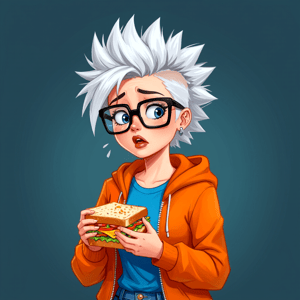 This is a Pavlovian response. If eating causes pain (bloating, nausea, inflammation), the brain learns to categorize food as a threat. My list of what I can eat is sadly much shorter than what I can’t eat. Anything with spice or flavour gives me bad heartburn and reflux, certain foods taste like dirt, and if my pain is high enough, I'm so nauseous that anything I put into my body, even just water, comes back out with little warning. It’s like your stomach is saying “Nope not today!” and throws everything up. No joke, the other week I was sitting on my recliner with my Goldendoodle Koa on my lap and I got hit with a strong, intense wave of electrical and stabbing pains that were shooting up my legs. That much pain in one shot prompted my body to immediately projectile throw up all over poor Koa and all over the floor, leaving a trail to the bathroom. It was awful. So not only did I feel gross, I now have to use spoons I don’t have, to clean up the mess. I had to wipe Koa down as best I could, clean up and wash the floors, and then give koa a bath of sorts. This common reaction I have with food when my pain hits like that, is to immediately, without warning, projectile vomit right where I’m standing. If I’m lucky I can make it to the toilet.
- The Mechanism: This often mimics ARFID (Avoidant/Restrictive Food Intake Disorder). Pain Warriors become terrified of eating because they associate a full stomach with increased pain, or unpleasant side effects like vomiting. A lot of us are running at max capacity because of our chronic pain and we can’t endure any more. We simply can’t, and that means we will do almost anything to avoid pain or something else unpleasant, even if it’s not good for us.
- The Example: Imagine someone who suffers from Endometriosis, causing severe endo belly and cramping after meals. Over time, she subconsciously starts eating less and less. She isn't trying to lose weight; she is terrified that if she eats lunch, she won't be able to sit at her desk for the rest of the afternoon. It’s a very real struggle that plagues millions of women. How are we supposed to nourish our bodies when we process food so painfully, or the body expels it because it cannot manage that high level of pain and digesting food.
2. Nausea and Appetite Suppression
 Pain signals and hunger signals compete for the brain's attention. Actually any of the brains signals compete with chronic pain for the brain’s attention. Usually,...unfortunatelyy…pain wins. Furthermore, the medications used to treat pain often destroy the appetite. 3 of the medications I take all suppress appetite and cause weight gain, which makes it difficult to want to eat. I feel full most of the time, even if I haven’t eaten or eaten much. That full feeling makes me feel sick, nauseous and causes me pain, sometimes to the point it’s just not worth the fallout of eating, so I don’t eat. My usual routine is to make my lunch at 12:45/1:00, as that’s when I am able to eat with fewer consequences, and it preps my stomach for my afternoon medications.
- The Mechanism: High-intensity pain triggers the sympathetic nervous system (fight or flight), which shuts down digestion and can expel food to preserve resources. Opioids, SSRIs, and anticonvulsants used for nerve pain can also cause chronic nausea. Some of them even cause severe stomach pain. Unfortunately it’s not the kind of nausea that goes away with traditional methods used to treat it.
- The Example: Imagine someone who takes medication for chronic migraines. The meds make them nauseous until about 2:00 PM. They skip breakfast and lunch daily. By evening, they are starving and tend to binge on easy-to-eat foods. This creates a cycle of starvation and binging that destabilizes blood sugar and triggers more migraines.
How It Starts: The Slippery Slope
Disordered eating in chronic pain patients rarely happens overnight. It begins as a seemingly sensible, health-conscious effort toward symptom management and then slowly devolves into dangerous restriction. This process often follows two phases:
Phase 1: The Elimination Game
 It starts with the understandable desire to find triggers. A person may begin by cutting out common inflammatory suspects like gluten or dairy, then progress to nightshades, sugar, or processed foods. While medically guided elimination diets can be necessary, without professional guidance, this can quickly lead to Orthorexia, which is an unhealthy obsession with eating only clean or safe foods, often resulting in malnutrition. For example, a person with Fibromyalgia might read that diet cures inflammation, eliminates five major food groups, and six months later be eating only rice, steamed chicken, and blueberries. They become malnourished, their hair is thinning and they are fatigued, but are too terrified to reintroduce foods for fear of a pain flare-up.
Phase 2: The "Save it for Later" Trap
Patients often delay eating to save their comfort for later in the day, or to ensure they are empty for a medical appointment or physical therapy. This phase is marked by patients delaying eating to save their comfort for a specific time or event, or to ensure they are empty for a medical appointment or physical therapy. This pattern of avoidance leads to a fasting/feasting cycle that severely disrupts metabolism and mood. For instance, someone with severe IBS might refuse to eat all day until they are safely home at 6:00 PM to avoid an urgent bathroom situation during their commute. They effectively fast for 18 hours, then eat rapidly at night, which causes severe bloating and pain, ultimately reinforcing their belief that food hurts.
Coping Strategies: Managing Nutrition While in Pain
Healing this relationship requires a shift in mindset: Nutrition is pain management. Without fuel, the body cannot repair tissue or regulate pain signals, meaning under-fueling can actually worsen pain perception and delay recovery.
To re-establish a healthy and sustainable relationship with food, the focus must move away from seeking a perfect, anti-inflammatory diet and towards practical strategies for consistent, baseline fueling. These include:
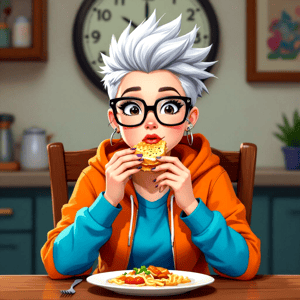 1. Separate Appetite from Eating (Mechanical Eating): In my experience, you cannot wait until you feel hungry to eat, because the extreme pain, pain-related nausea, or appetite-suppressing medication may silence that signal entirely. I almost never feel hungry, so for me it was a better idea to switch to Mechanical Eating. This can sometimes be an added chore in itself during a pain flare or on a very full day, but in the long run, you’ll feel better.
 - The Strategy: Eat by the clock, not the feeling. Set an alarm for every 3–4 hours, regardless of whether you feel hungry. If you’re having a better day, when you make a meal, try making double, or two of something, so that you can heat your meal up as you already have something made to eat.
- The Example: Instead of asking "Do I want to eat?" try to treat food like a medication that you take at certain times in the day. Try making yourself eat a small amount of food at those times of the day, regardless of how you feel. For me, I can’t eat much in the morning or I throw it back up, so I often eat at the same time that I take my afternoon and evening medications, as by then I’m not as nauseous. Eating every few hours in the afternoons and evenings ensures that I maintain a minimum caloric floor. This year I’m going to try and eat earlier in the day, even if I feel nauseous, in hopes of training my stomach to keep food down when eaten in the morning.
-
- The Strategy: Utilize convenience foods without guilt. Pre-chopped frozen onions, jarred garlic, bagged salads, liquid meal replacements (Ensure, Soylent, protein shakes), and ready-made meals are lifesavers. Many communities and cities have a version of a Meals on Wheels service that often delivers, and from my experience using our community kitchen’s frozen meals, they are fairly affordable. The most important thing though is that heating these up does not deplete your already depleted energy. I take mine out the night before so that it defrosts and cooks quicker.
- The Example: Imagine someone who keeps a stash of bad pain day foods by their bed. Stuff like protein bars, jerky, and squeezy applesauce pouches. On days it is difficult to stand up, they can still get 1,000 calories into their body without leaving their mattress.
 3. Change the Texture: If chewing (due to conditions like TMJ) or digestion (due to gastroparesis or IBS) is the source of pain, remove the mechanical work required. There are lots of meals that are softer and don’t require the same kind of chewing that some meals take.
 -
- The Strategy: Soft diets aren't just for babies. Smoothies, blended soups, and mashed vegetables require less energy to eat and less energy to digest.
- The Example: Imagine someone who has severe TMJ. They invested in a high-powered blender. Instead of skipping dinner because their jaw hurts, they blend cooked chicken, broth, and vegetables into a soup. It provides the protein they need to keep their muscles from atrophying.
-
- The Strategy: Look for a Registered Dietitian (RD) who specializes in gastrointestinal disorders, disabilities, or Avoidant/Restrictive Food Intake Disorder (ARFID), not just general weight loss. You need someone knowledgeable with the eating relationship that disabled or chronically ill have with food to manage day to day.
- The Example: Imagine a doctor advises you to just eat intuitively. You might feel like a failure because your intuition says don't eat. Finding a dietitian who understands ARFID and chronic pain helps build a safe food hierarchy rather than forcing someone to eat triggers.
A Final Note
 If you are reading this and realizing your eating habits have become disordered due to pain, give yourself grace. You are not vain or weird, and you are not failing. We are all human beings trying to survive in a hostile environment with limited resources.
It’s important to remind ourselves that this is not a moral failure. It is a logical adaptation to chronic suffering. Every choice we make to restrict, avoid, or fast is an attempt to protect ourselves from perceived increase in pain, and that deserves compassion. We have all been operating in survival mode, and survival mode is messy. Release the shame and the pressure to eat perfectly.
The goal isn't for us to make and eat a perfect anti-inflammatory diet or to achieve culinary excellence. The goal is simple, yet profound: to keep your engine running. Fuelling your body, even with a simple piece of toast or a meal replacement shake, is an act of defiance against the pain that seeks to deplete you entirely. It is a necessary foundation so you have the baseline energy and strength to keep fighting the pain. Start small, be kind to yourself, and remember: fed is best.
What has changed about your relationship with food after having chronic pain?